AI Tools for Digital Marketing: Top Platforms, Use-Cases & Best Practices in 2026

The methods of digital marketing have changed dramatically, and the year 2026 can be considered a turning point when marketing and artificial intelligence became one entity. No matter how big or small, companies are using AI-powered solutions for their digital marketing channels to save time, create a tailored experience for the customer, and get tangible outcomes.
Using AI is not simply a passing trend; it is a required step. By using AI-powered marketing tools, companies can now make data-driven choices faster and more accurately than ever before, as they can go from content creation to predictive analytics. Whichever your business might be, a startup or an established enterprise, grasping how to implement AI in marketing efficiently is what can make the difference of your competitive advantage to be of a high level.
Understanding the Use of Artificial Intelligence in Marketing
Artificial intelligence tools in marketing cover many aspects. Fundamentally, AI goes through huge data sets to find trends, forecast behaviours, and execute monotonous operations automatically. So marketers get to spend more time on strategic thinking and creative work, whereas AI is taking care of the arduous work.
AI-powered tools are capable of dividing audiences very accurately, can determine the best usage of the advertising budget on a minute-to-minute basis, create new content ideas, and, in fact, forecast which leads are most probable to convert. The system is always learning and hence, it keeps getting better and better in its suggestions and results. It is this ever-evolving smartness that is the reason why AI tools cannot be done away with in contemporary marketing plans.
Top AI Tools for Digital Marketing in 2026
AI Tools for Content Marketing
Content is still the main thing, and AI has become its most loyal helper. Marketers are using tools such as Jasper, Copy.ai, and ChatGPT to easily produce whole editorial lines for blogs, social media, and newsletters. These systems rely on natural language processing to produce content that appeals to the target audience and at the same time follow the brand voice.
Moreover, AI tools perform content writing and then analyze the same performance, suggest optimization strategies, and identify trending topics that are worth exploring. Such a combination of creation and analysis makes content marketing more efficient and effective.
AI Tools for SEO and Analytics
SEO is getting more and more complicated; however, AI makes it simple. Surfer SEO, Clearscope, and SEMrush are examples of platforms that utilize AI to comprehend the user’s search intent, suggest keywords, and make content more SEO-friendly to get higher rankings. These instruments can simultaneously scrutinize hundreds of ranking factors and provide actionable insights that would require human efforts for days.
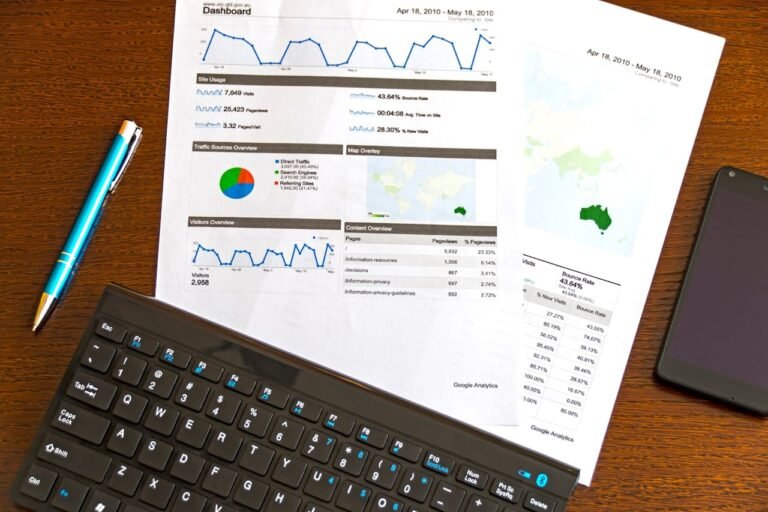
Google Analytics 4 and comparable platforms have embedded AI that enables them to foresee user behaviour, figure out conversion opportunities, and detect trends that are not obvious in your data. This prediction skill changes the marketers’ way from being reactive to being proactive.
AI Tools for Social Media Marketing
Handling several social media accounts necessitates that the user be consistent and creative, which are two things that AI is very good at. The tools, such as Hootsuite Insights, Sprout Social, and Buffer’s AI features, facilitate the scheduling of posts, the analysis of engagement patterns, and the suggestion of the most suitable posting time.
With the help of AI, social listening instruments become attentive to the brands that are mentioned and the sentiment that is shown in different platforms, and they give you a signal when a crisis is coming or when you have new opportunities in real-time. There are also some platforms that provide you with the most suitable hashtags and different versions of your captions so that your content can be seen by more people.
AI Tools for Email Marketing
The email marketing is no longer at the level of batch and blast campaigns. Now AI-powered platforms such as Mailchimp, HubSpot, and ActiveCampaign employ machine learning to personalize subject lines, predict send times, and dynamically segment audiences.
In order to optimize the content different segments receive, these tools look at the subscribers’ behaviour. Future campaigns are automatically adjusted by them for better results. The testing of A/B becomes more advanced since AI recognizes the winning variations quicker and uses the learning across campaigns.
AI Tools for Paid Ads and Targeting
AI is now used in the likes of Google Ads and Meta’s ad manager to optimize bidding strategies, target audiences, and creative elements. By using Adzooma and Revealbot, you can take this a step further by running campaigns on different platforms simultaneously and having them managed by one tool.
AI studies the performance of different ads for certain audience segments and changes budgets accordingly so that the campaigns that yield the best results get more funding. This kind of dynamic optimization allows your marketing budget to be more efficient without the need for regular manual work.
How to Use AI in Marketing Effectively
Firstly, look for repetitive tasks that take up a lot of your time. Those tasks are the best ones to automate by AI. After that, make sure your data structure is strong because AI tools require good data if they are to provide good insights.
Involve AI tools slowly, letting your employees gain knowledge and get accustomed. Use one with the other, i.e., the work done by AI is to be followed by the intervention of human creativity and strategic thinking. Keep in mind that the use of AI is to upgrade your marketing activities and not to take over the human parts, which are the basis of genuine relationships with customers.
Best Practices for Using AI Tools in Digital Marketing
Always keep human control in the loop. Check AI-generated content to ensure it is correct, fits the brand, and is genuine. Have clear goals for each AI tool and check the results against those goals regularly.
Put money into training your employees to work with these tools efficiently. Keep yourself informed of the new features and possibilities as AI technology changes very fast. Be customer-friendly in using AI by telling your customers the truth especially when it comes to data collection and personalization.
Challenges and Limitations of Artificial Intelligence in Marketing
However, even with its impressive abilities, AI is not without limits. For instance, it finds it hard to capture subtle brand voice, deal with cultural sensitivity, and engage in highly creative thinking. Also, keeping in line with data privacy laws, customer information has to be handled very cautiously, and too much dependence on AI may result in indifferent and uninviting marketing that lacks personalization.
On the other hand, using AI instruments is not free of charge; there is a necessity of an initial investment and cost for the further maintenance. Small businesses may have a problem with a lack of money necessary for the purchase of these tools, though affordable alternatives are becoming more and more available.
Future of AI Tools for Marketing in 2026 and Beyond
The trajectory is clear: AI will increasingly be more intuitive, accessible, and integrated in every marketing function. So, you can expect hyper-personalization at scale, predictive customer journey mapping, and AI-generated video content to be the norm pretty soon.
AI will be the main factor for voice and visual search optimization, and conversational AI will manage even more complicated customer interactions.
Marketers, who consider AI as a co-worker instead of a rival, will be going from strength to strength.
Conclusion
AI tools for digital marketing have moved from experimental to essential. The application of Artificial Intelligence in marketing gives companies the opportunity to be more efficient, reach a higher level of personalization, and achieve quicker growth of their business compared to traditional methods.
When a company knows how to use AI in marketing in a strategic way, and at the same time, follows the best practices, then it is like they are putting their brand in a position from which it will continue to be successful despite the competition becoming more powerful. AI will be used by marketers who will still keep the human element that is essential for strong and long-lasting customer relationships.
FAQs on AI Tools for Digital Marketing
What are the best AI tools for digital marketing in 2026?
The best tools are Jasper for content, Surfer SEO for optimization, HubSpot for email marketing, Hootsuite for social media, and Google’s AI-powered analytics platforms.
How is artificial intelligence used in marketing today?
AI is used to analyze data, automate repetitive activities, personalize customer experiences, optimize ad campaigns, create content, and predict consumer behavior.
Can small businesses use AI tools for marketing effectively?
Yes, definitely. Numerous AI tools are affordable and free, which can be very helpful without the need for a large budget or technical skills.
What are the benefits of using AI in digital marketing?
The advantages are time saving, better personalization, data-driven decisions, cost efficiency, better ROI, and the capability to scale marketing initiatives.
How do I start using AI in marketing campaigns?
You can find time-consuming tasks that AI could automate very quickly. Look for the relevant AI tools, pick one platform to get started, train your staff, and gradually extend your integration of AI when you get more results.