
What Is Education Marketing – Definition, Strategy, Trends & Best Practices

Introduction
The global edtech industry is expected to exceed $215.8 billion by 2026, driven by AI integration, skills-focused learning, and investments in digital infrastructure. However, in such a hectic environment, how can educational institutions truly differentiate themselves? Their answer will be found in education marketing, a considered strategy for drawing students, nurturing trust, and boosting enrollment numbers. This guide covers educational marketing, tried-and-tested methods, current issues, upcoming trends, and practical suggestions for an institution’s success.
Key Takeaways
- Education marketing is the process of promoting schools, universities, and edtech platforms through both digital and traditional channels to students, parents, and stakeholders.
- The main strategies are SEO, PPC, content marketing, social media, and tailored campaigns.
- Issues such as limited budgets, data privacy, and competition are some of the reasons why AI solutions and first-party data have become a necessity.
- The 2026 trends revolve around AI personalization, multi-platform SEO, outcome transparency, and hyper-local targeting.
- The major emphasis is on tracking ROI, offering interactive content, and adjusting to AI-powered search engines.
What Is Education Marketing?
Education marketing refers to the activities school/college administrations, teachers, or administrators of educational programs, or even companies providing e-learning products or services, employ to promote their offerings (or themselves) to potential students/patients, parents, educators, and community members through the use of both digital and traditional promotion channels. It makes a distinction between:
K-12 Marketing: Mostly, parents and guardians of children who attend school are the targets.
Higher Education Marketing: Prospective students for college/university are the main focus here.EdTech Marketing: It is about advertising online courses, learning apps, and SaaS platforms.
The marketing concept of education revolves around identifying student and parent requirements, applying data-driven personalization to demonstrate value, and being unique in the saturated market. The goals include increasing enrollment, enhancing brand recognition, and nurturing long-term engagement.
Education Marketing Strategies
The most successful education marketing strategies are those that use digital tactics combined with listener insights
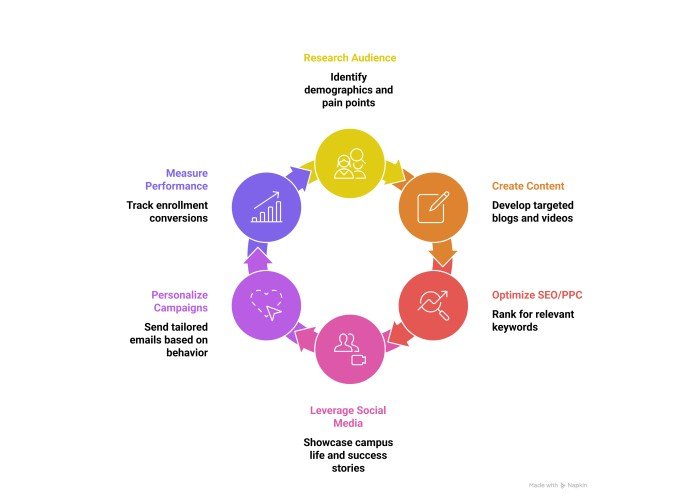
Key steps include:
- Research Your Audience: Know ages, locations, concerns, and motivations for choices.
- Create Targeted Content: Publish articles, films, and reports addressing student/parent needs.
- Optimize for SEO & PPC: Try to be seen for words like “top universities in Dubai” and put ads in front of the right people.
- Leverage Social Media: Instagram, LinkedIn, and TikTok can be used to give a glimpse of the campus, portray life there, and share success stories among students.
Building trust through campus storytelling and student success campaigns is made easy by partnering with a leading social media agency in Dubai, which enables consistent engagement and brand visibility.
- Personalize Campaigns: Use AI software to figure out behavior and send emails customized accordingly.
- Measure Performance: Get an idea of recruitment conversions instead of focusing only on clicks.
Digit Cure, a result-focused digital marketing agency, is committed to expanding positive online visibility of educational brands across the UAE through advanced SEO, precisely targeted social media marketing, and performance-based PPC campaigns.
Education Marketing Challenges
Amongst key challenges faced by education marketers:
- Budget Constraints: Marketers in the higher education sector often admit that scarce funds are one of their major problems.
- Are you hesitating about whether to focus on organic rankings or paid campaigns? To make the right decision, check out this comparison of SEO vs. PPC in Dubai.
- Enrollment Declines: Due to demographic changes, the number of applicants coming forward may decrease.
- Data Privacy: Institutions have to comply with stricter rules governing student data collection practices.
- Rising Competition: Being able to differentiate from other cognitive-run institutions is highly demanding.
- Solution: Focus first on getting data directly from users, utilizing AI-powered solutions for highly targeted and therefore cost-effective advertising, and switching to priority campaigns where return on investment is maximized.
Education Marketing Trends 2026
Try to be a step ahead with these education marketing trends a few years from now:
- AI Hyper-Personalization: Chatbots and predictive analytics customize user experience.
- Multi-Platform SEO: On-site optimization is performed not only for Google but also for ChatGPT and voice search.
- Outcome Transparency: Putting career rates at the employment level and the success of alumni in the spotlight.
- Hyper-Local Campaigns: Target India and the UAE, for example, by producing content in their local languages.
When an educational institution aims at students living in particular areas only, a solid local SEO strategy in Dubai is capable of greatly increasing the number of qualified inquiries.

With knowledge of Dubai’s complicated digital environment, Digit Cure assists enterprises in obtaining leads and growing at a faster pace.
Education Marketing Best Practices and Tips
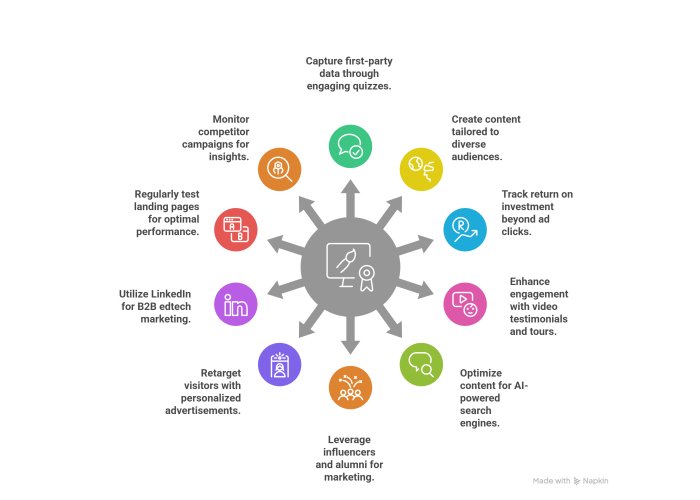
Implement these education marketing recommendations:
- Utilize quizzes that are interactive to collect data coming directly from sources.
- Produce content in vernacular for the benefit of a heterogeneous community.
- Don’t just count ad clicks, measure enrollment ROI.
- Film testimonial videos and virtual tours.
- Make sure that there is support for AI-powered search engines.
- Collaborate with influencers and alumni representatives.
- Show visitors of the website advertisements that are consistent with their interests and preferences.
- Make use of LinkedIn for B2B Edtech marketing.
- Do A/B testing for different versions of the landing pages on a regular basis.
- Keep an eye on rivals’ marketing campaigns to gather useful information.
Conclusion
Marketing education is now an indispensable part of growth for educational facilities, especially in today’s mostly digital environment. Schools can double their enrollment and strengthen their brand authority if they incorporate marketing strategies that have been proven, hurdle their challenges with AI technologies, and keep abreast of trends. Thinking of boosting your marketing? Digit Cure is just a call away and will provide you with professional digital marketing support.
FAQs
What is the meaning of educational marketing?
Educational marketing is the use of targeted digital strategies to promote schools, courses, and edtech to students/parents, build trust, and increase enrollment.
What is the marketing concept of education?
It focuses on student/parent needs, using data-driven tactics such as personalization to demonstrate value and be competitively different.
What are the education marketing challenges?
The major problems in this area are reduced applicant numbers, rising advertising costs, data privacy, and broken tracking, which may be addressed by gathering first-party data and utilizing AI.
What are the latest education marketing trends?
The following are some of the most current trends in education marketing: AI hyper-personalization, multi-platform SEO, focusing on the outcomes of a message, and running hyper-local campaigns in regions like India and the UAE.
What are the best practices in education marketing?
Focus on SEO first, deliver content that proves outcomes, employ interactive tools, monitor ROI from enrollment, and change according to AI search engines.